

“You have depression.” “You might have bipolar disorder.” Those words can be confusing and sometimes overwhelming. Millions struggle with these conditions. Yet, many don’t know the difference.
Depression drains energy and joy. Every day may feel heavy. Bipolar disorder swings between extreme highs and crushing lows. Misdiagnosis leads to the wrong treatment and more suffering. Knowing the difference gives you control over your mental health. The right treatment can change everything.
What Is Depression?
Depression, medically known as major depressive disorder (MDD), is a mental health condition that profoundly affects how a person thinks, feels, and behaves. Moreover, depression isn’t just feeling sad for a day or two. Persistent low mood and exhaustion can disrupt work, relationships, and daily life.
The World Health Organization (WHO) ranks it as a leading cause of disability worldwide. Around 280 million people struggle with its effects, often in silence. Mental health, physical health, and social well-being all take a hit when depression goes untreated.
Understanding Depression as a Disorder
Depression is more than just “feeling down” or having a bad day. It is a chronic condition with biochemical, psychological, and environmental components. It alters the brain’s neurotransmitter activity, particularly involving serotonin, dopamine, and norepinephrine—chemicals crucial for regulating mood, energy, and motivation.
Key Characteristics of Depression:
- Duration: Symptoms persist for at least two weeks but can last months or even years.
- Intensity: The condition significantly impairs daily life, making basic activities like eating, sleeping, or working feel insurmountable.
- Prevalence: According to JAMA Network, 8.4% of U.S. adults experienced at least one major depressive episode in 2020.
Common Symptoms of Depression
Depression looks different for everyone. Some signs stand out more than others. Key symptoms help with diagnosis.
Emotional Symptoms:
- Persistent Sadness or Emptiness: A sense of hopelessness that doesn’t fade.
- Loss of Interest: Hobbies, social activities, and relationships no longer bring joy.
- Guilt or Worthlessness: Overwhelming feelings of self-blame, often irrational.
Cognitive Symptoms:
- Difficulty Concentrating: Trouble focusing on tasks or making decisions.
- Negative Thought Patterns: Constant rumination or catastrophizing.
Physical Symptoms:
- Sleep Disturbances: Insomnia or excessive sleep (hypersomnia).
- Appetite Changes: Significant weight loss or gain unrelated to dieting.
- Fatigue: Persistent tiredness, even after adequate rest.
Behavioral Symptoms:
- Social Withdrawal: Avoiding family, friends, or work responsibilities.
- Reduced Productivity: Declining performance at work or school.
- Self-Harm or Suicidal Thoughts: In severe cases, depression may lead to thoughts or attempts of self-harm.
Data Highlights:
- The WHO reports that 800,000 people die by suicide each year, many of whom suffer from untreated depression.
- Depression is linked to an 80% higher risk of developing chronic health conditions like heart disease and diabetes.
What Is Bipolar Disorder?
Bipolar disorder causes extreme mood and energy shifts. High-energy phases (mania or hypomania) bring excitement, restlessness, or risky choices. Low-energy phases (depression) drain motivation and make daily tasks hard. Mood episodes can last days, weeks, or months. This isn’t just normal mood swings—it’s a lifelong condition. Work, relationships, and daily life can suffer without treatment.
About 2.8% of U.S. adults experience bipolar disorder each year, according to the NIMH. Many people misunderstand or misdiagnose the condition, which delays proper treatment. Without the right diagnosis, symptoms can worsen and disrupt daily life. Catching it early and getting the right treatment makes a huge difference.
Types of Bipolar Disorder
Bipolar disorder is classified into distinct types based on the severity and nature of the mood episodes. Understanding these variations is essential for appropriate diagnosis and treatment.
1. Bipolar I Disorder
- Defined by at least one manic episode lasting seven days or more, or requiring hospitalization.
- Depressive episodes often occur but are not required for diagnosis.
- Manic episodes are severe enough to cause significant impairment in daily functioning.
2. Bipolar II Disorder
- Involves at least one major depressive episode and one hypomanic episode.
- Hypomania is less intense than full-blown mania and does not typically require hospitalization.
- Misdiagnosed as major depressive disorder more often than Bipolar I.
3. Cyclothymic Disorder (Cyclothymia)
- Characterized by numerous periods of hypomanic symptoms and depressive symptoms that do not meet the criteria for a full episode.
- Symptoms persist for at least two years in adults or one year in children and adolescents.
- Often overlooked because symptoms may appear mild or intermittent.
4. Other Specified and Unspecified Bipolar Disorders
- Includes conditions where symptoms do not fit neatly into the above categories.
- May be triggered by substances, medical conditions, or other specific factors.
Symptoms of Mania or Hypomania
Manic and hypomanic episodes are hallmark features of bipolar disorder. While mania is more severe, hypomania is a milder form of the elevated mood but still has noticeable effects.
Emotional Symptoms:
- Euphoria or Irritability: Overwhelming feelings of happiness or frustration, often disproportionate to the situation.
- Grandiosity: Inflated self-esteem or an unrealistic sense of one’s abilities.
Behavioral Symptoms:
- Increased Activity Levels: Engaging in multiple tasks simultaneously, often without completion.
- Risky Behaviors: Impulsive actions, such as overspending, reckless driving, or risky sexual behavior.
- Talkativeness: Rapid, incessant speech that may be difficult to interrupt.
Physical and Cognitive Symptoms:
- Decreased Need for Sleep: Feeling rested after just a few hours of sleep or staying awake for days.
- Racing Thoughts: An inability to focus due to rapid, fragmented thinking.
- Heightened Creativity or Productivity: A surge in ideas or goals, often unsustainable.
Data Insight:
- Manic episodes must last at least seven days (or less if hospitalization is required), while hypomanic episodes last a minimum of four days.
Symptoms of Depressive Episodes in Bipolar Disorder
Depressive episodes in bipolar disorder share similarities with major depressive disorder but are typically interspersed with periods of elevated mood.
Emotional Symptoms:
- Persistent Sadness: Feeling hopeless, empty, or numb.
- Loss of Interest: A marked decline in enthusiasm for previously enjoyed activities.
Behavioral Symptoms:
- Social Withdrawal: Avoiding interactions with friends, family, or colleagues.
- Inactivity: Struggling to find motivation for even basic tasks.
Cognitive Symptoms:
- Impaired Concentration: Difficulty focusing or remembering details.
- Negative Self-Perception: Excessive guilt, worthlessness, or self-criticism.
Physical Symptoms:
- Sleep Disturbances: Insomnia or excessive sleeping.
- Appetite Changes: Overeating or significant weight loss.
- Fatigue: Persistent tiredness, even with adequate rest.
Serious Risks:
- Suicidal ideation or attempts are significantly higher in individuals with bipolar disorder. Studies suggest that 25%-60% of individuals with bipolar disorder attempt suicide at least once in their lives.
How Do Depression and Bipolar Disorder Differ?
Depression and bipolar disorder are two distinct mental health conditions, but they are often confused due to overlapping symptoms. While both involve mood disturbances, the nature, patterns, and triggers of these disturbances vary significantly.
Key Differences Between Depression and Bipolar Disorder
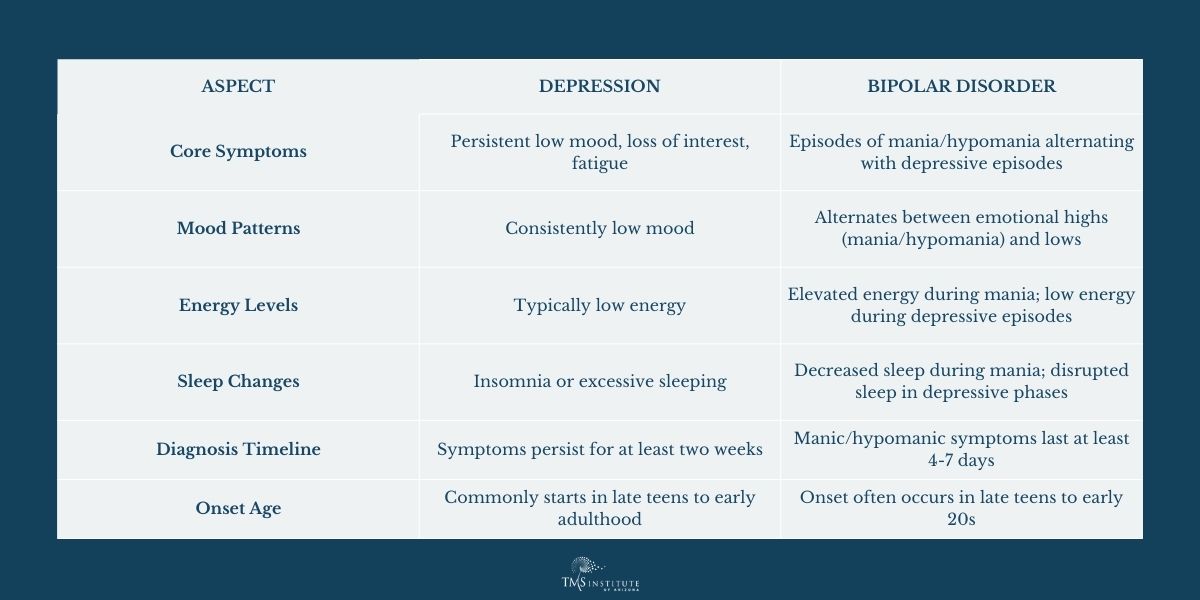
In summary, depression brings a constant low mood and exhaustion. Bipolar disorder shifts between extreme highs and deep lows. Only bipolar disorder includes manic or hypomanic episodes. Mood swings, energy, and sleep patterns help tell them apart. Recognizing these differences is key to a proper diagnosis. Timeline and symptom progression also matter. The right diagnosis leads to better treatment and stability.
Treatment Options for Depression and Bipolar Disorder
Each condition requires a specific plan for effective care.
Treatment for Depression:
Depression is often managed through a combination of therapies, medications, and lifestyle changes:
- Psychotherapy:
- Cognitive Behavioral Therapy (CBT): Helps identify and modify negative thought patterns.
- Interpersonal Therapy (IPT): Focuses on relationships and social interactions to improve emotional well-being.
- Medications:
- Antidepressants: SSRIs and SNRIs are commonly prescribed for symptom relief.
- Tailored to individual needs based on symptom severity and response to previous treatments.
- Lifestyle Modifications:
- Regular physical activity has been shown to improve mood and energy levels.
- Balanced diets rich in nutrients like omega-3 fatty acids may support brain health.
- Consistent sleep schedules enhance overall mental health stability.
- Transcranial Magnetic Stimulation (TMS):
- TMS is a non-invasive, FDA-approved treatment for depression, particularly for individuals who have not responded to traditional therapies.
- It uses magnetic pulses to stimulate nerve cells in the brain, improving mood-regulating mechanisms.
- Research shows that TMS can lead to significant symptom reduction in 60-70% of patients with treatment-resistant depression.
Treatment for Bipolar Disorder:
Bipolar disorder management focuses on stabilizing mood swings and preventing relapses:
- Mood Stabilizers: Medications like lithium are the cornerstone of bipolar treatment.
- Antipsychotics: Often used during acute manic episodes.
- Psychotherapy: Techniques like family-focused therapy and psychoeducation are vital for long-term management.
- Routine Building: Regular sleep, diet, and exercise patterns are crucial for stability.
When Should You Seek Help?
Ignoring symptoms often makes things worse. Early treatment can ease symptoms and improve recovery. Support leads to a healthier, more stable life
Signs You Should Seek Help:
- Persistent Mood Changes: Feelings of sadness, hopelessness, or emptiness that last for more than two weeks may indicate depression or the depressive phase of bipolar disorder.
- Extreme Highs or Lows: Episodes of mania or hypomania (characterized by excessive energy, impulsive behavior, or irritability) alternating with depressive episodes may point to bipolar disorder.
- Changes in Sleep Patterns: Insomnia, hypersomnia, or irregular sleep can be warning signs of an underlying mental health issue.
- Difficulty Functioning: Struggling to complete daily tasks, maintain relationships, or meet work responsibilities due to emotional or physical exhaustion.
- Loss of Interest: A noticeable decline in enthusiasm for hobbies, social interactions, or activities that once brought joy.
- Physical Symptoms: Unexplained fatigue, appetite changes, or chronic pain that medical evaluations cannot attribute to physical health conditions.
- Thoughts of Self-Harm or Suicide: Any thoughts of self-harm or feelings of being a burden to others should be taken seriously and addressed immediately.
Why Early Intervention Matters:
- Mental health conditions can worsen over time if left untreated, leading to more severe symptoms and complications.
- Early treatment is associated with better recovery rates and an improved quality of life.
- Preventative care can reduce the risk of co-occurring conditions, such as substance abuse or chronic physical illnesses.
When to Contact a Professional:
- When symptoms interfere with your ability to live a fulfilling life.
- When friends or family express concern about your behavior or emotional state.
- After experiencing a traumatic event, significant life change, or prolonged stress that affects your mental health.
Asking for help shows strength, not weakness. Taking action can bring relief and a sense of control. Support, treatment, and resources make a real difference in daily life. Struggles with mental health don’t have to be faced alone. A professional can help you find the right path forward.
Keep in mind: This content is not a diagnosis or treatment. Consult a professional for health-related advice.